Best Smart Scales 2026: Body Composition & Health Tracking for Europe
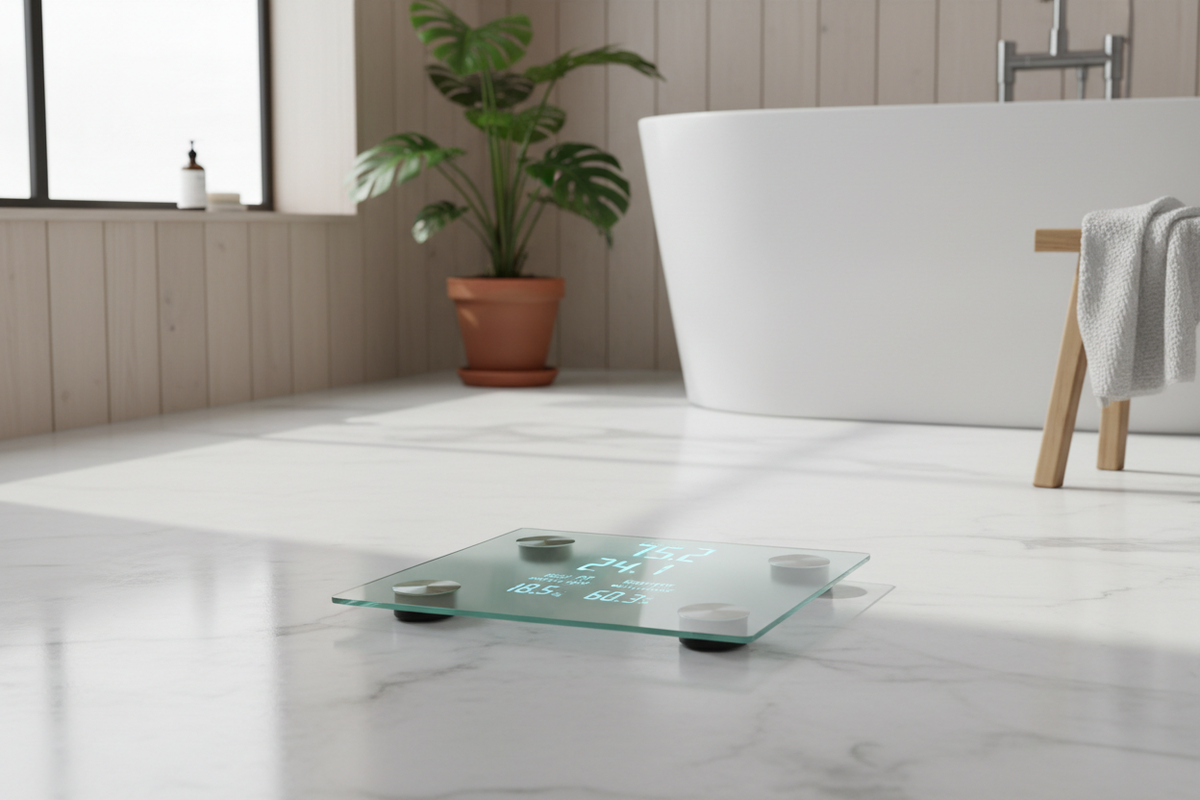
Best Smart Scales 2026: Body Composition & Health Tracking for Europe
Stepping on a scale used to tell you one thing: your weight. In 2026, smart scales tell you a great deal more — body fat percentage, muscle mass, bone density, visceral fat, hydration levels, and even cardiovascular indicators like pulse wave velocity. For European consumers focused on health, fitness, and longevity, a smart scale has become an essential companion to a smartwatch or fitness tracker. This guide covers everything you need to know to choose the best smart scale for body composition and health tracking, with full attention to EU compatibility, data privacy, and practical buying advice.
Why Upgrade to a Smart Scale in 2026?
A traditional bathroom scale gives you a single number. A smart scale gives you a comprehensive picture of your body composition and how it changes over time. Here's why the upgrade is worthwhile:
- Body composition analysis: Beyond weight, smart scales use bioelectrical impedance analysis (BIA) to estimate body fat percentage, skeletal muscle mass, bone mass, and body water percentage — metrics that are far more meaningful for health than weight alone.
- Trend tracking: Weight fluctuates daily due to hydration, food intake, and other factors. Smart scales log every measurement and display trends over weeks and months, giving you a realistic view of progress.
- Multi-user support: Most smart scales automatically recognise up to 8–16 different users by weight, making them ideal for families.
- App integration: Sync data automatically to health platforms including Apple Health, Google Fit, Fitbit, Garmin Connect, and others — creating a unified health dashboard alongside your wearable data.
- Motivation & accountability: Seeing your body composition data visualised over time is a powerful motivator, particularly when combined with data from a fitness smartwatch or a smart ring.
How Smart Scales Work: BIA Explained
The vast majority of consumer smart scales use Bioelectrical Impedance Analysis (BIA) to estimate body composition. Here's how it works:
When you step on the scale barefoot, a very low, imperceptible electrical current passes through your body via the metal electrodes on the scale's surface. Different body tissues — fat, muscle, bone, water — conduct electricity differently. By measuring the resistance (impedance) to this current, the scale's algorithm estimates the proportion of each tissue type in your body.
Accuracy considerations: BIA is an estimation method, not a clinical measurement. Results can be affected by hydration levels, recent exercise, food intake, and the time of day. For the most consistent readings, weigh yourself at the same time each day (ideally in the morning, before eating or drinking, after using the bathroom). The trend over time is more meaningful than any single measurement.
Electrode configuration matters: Entry-level scales use two electrodes (foot-to-foot measurement only), which provides less accurate body composition data. Mid-range and premium scales use four or more electrodes, including hand electrodes via a handheld bar, enabling a full-body measurement that is significantly more accurate.
Key Metrics to Look for in a Smart Scale
Not all smart scales measure the same metrics. Here's what to look for depending on your health goals:
Essential Metrics (available on most smart scales)
- Weight — measured in kg (standard in Europe)
- BMI (Body Mass Index) — calculated from weight and height
- Body fat percentage
- Skeletal muscle mass
- Body water percentage
- Bone mass
- Basal Metabolic Rate (BMR) — estimated daily calorie burn at rest
Advanced Metrics (mid-range to premium scales)
- Visceral fat rating — fat surrounding internal organs, a key cardiovascular health indicator
- Subcutaneous fat — fat beneath the skin
- Metabolic age — compares your metabolic rate to age norms
- Protein percentage
- Pulse Wave Velocity (PWV) — an indicator of arterial stiffness and cardiovascular health, available on a small number of premium scales
- Segmental body composition — breaks down muscle and fat by body segment (left arm, right arm, trunk, left leg, right leg)
EU Compatibility & Data Privacy
For European consumers, two factors deserve particular attention: technical compatibility and data privacy.
Technical Compatibility
- Units: Ensure the scale displays weight in kilograms (kg) — standard across Europe. Most scales sold in the EU support kg, lbs, and jin (Chinese unit), but verify before purchasing.
- Connectivity: Most smart scales connect via Bluetooth to a smartphone app, with some also offering Wi-Fi for automatic background syncing without needing to open the app. Wi-Fi scales must comply with EU Radio Equipment Directive (RED) 2014/53/EU and carry CE marking.
- Power: Smart scales are typically battery-powered (AA or AAA batteries, or rechargeable via USB-C). No mains plug compatibility issues apply, but verify battery type and expected life — quality scales last 6–12 months on a set of batteries.
GDPR & Health Data Privacy
Smart scales collect sensitive health data — body composition metrics that fall under the category of health data, which receives the highest level of protection under GDPR. Before purchasing, review the manufacturer's privacy policy carefully:
- Where is your data stored? EU-based or EU-compliant data centres are preferable.
- Is your data shared with third parties for advertising or research purposes?
- Can you export and delete your data on request?
- Does the scale function without a cloud account (local-only mode)?
Some manufacturers offer explicit GDPR compliance statements and EU-specific privacy policies. Prioritise these brands for peace of mind.
Types of Smart Scales & Price Ranges
Smart scales are available across a wide price range in Europe:
- Entry-level (€20–€50): Basic body composition metrics (weight, BMI, body fat, muscle mass, water percentage) via foot-to-foot BIA. Bluetooth connectivity, companion app, multi-user support. Suitable for general health monitoring and fitness tracking.
- Mid-range (€50–€120): More accurate 4-electrode or 6-electrode BIA, additional metrics (visceral fat, metabolic age, protein), Wi-Fi connectivity for automatic syncing, better app experience, and broader platform integration (Apple Health, Google Fit, Fitbit, Garmin).
- Premium (€120–€300+): Full-body segmental analysis, handheld electrode bar for upper-body measurement, advanced cardiovascular metrics (PWV), medical-grade accuracy claims, premium materials (tempered glass, stainless steel electrodes), and comprehensive health platform integration.
For most users focused on fitness and general health tracking, a mid-range scale offers the best balance of accuracy, features, and value. Premium scales are most relevant for users with specific health conditions or those who want the most detailed body composition data available outside a clinical setting.
Smart Buying Tips for European Consumers
- Check app compatibility: Before buying, verify the companion app is available in your language and compatible with your smartphone OS (iOS/Android). Also check which health platforms it syncs with — if you use Garmin Connect or Apple Health, confirm native integration rather than relying on third-party workarounds.
- Weigh yourself consistently: For meaningful data, establish a consistent weighing routine — same time of day, same conditions. Morning, after using the bathroom and before eating, is the gold standard.
- Don't obsess over single readings: Body weight and composition fluctuate naturally. Focus on weekly or monthly trends rather than daily numbers.
- Consider electrode count: If body composition accuracy is important to you, invest in a scale with at least 4 electrodes. Foot-only scales are less accurate for body fat estimation, particularly for people with atypical fat distribution.
- Multi-user households: If multiple family members will use the scale, check the maximum number of user profiles supported and whether automatic user recognition works reliably at similar weights.
- EU warranty: EU consumer law guarantees a minimum 2-year warranty. Buy from authorised EU retailers to ensure coverage and access to EU-compliant customer support.
- Pair with a wearable: A smart scale is most powerful when combined with a fitness tracker. Pairing scale data with activity, sleep, and heart rate data from a smartwatch or smart ring gives you a genuinely comprehensive health picture. See our guides to the best fitness smartwatches and best smart rings for 2026.
Conclusion: Smarter Health Starts at Your Feet
A smart scale is one of the most accessible and impactful health technology investments you can make in 2026. For a relatively modest outlay — as little as €30–€50 for a quality entry-level model — you gain a detailed, ongoing picture of your body composition that goes far beyond what a traditional scale can offer.
Prioritise accurate BIA (4+ electrodes for best results), strong app integration with your preferred health platform, GDPR-compliant data handling, and multi-user support if you share your home. Combined with a fitness wearable and a consistent measurement routine, a smart scale becomes a cornerstone of an evidence-based approach to health and fitness.
Ready to take control of your health data? Browse our full range of smart scales and health tracking devices at onlinestore24.eu — with fast EU-wide shipping and all prices in euros.
Meta description: Discover the best smart scales for body composition & health tracking in Europe 2026. Expert buying guide with EU features, accuracy tips & top picks.